Tuesday, February 7, 2017

Stepping Inside Disney History with a Rare Trip Walt’s Animation Vault

SHARE TWEET 0

pinocchio-art-slice

Tucked away on a side street in Southern California, not too far from Walt Disney Studios is a nondescript building stacked ceiling-high with more treasures than any Disney, history, or animation nut could imagine. There's nothing fancy about it from the outside. You wouldn't know it if you saw it. But, as any Indiana Jones fan can tell you, sometimes the most unremarkable vessels hold the greatest rewards.

The building is the Animated Research Library, Disney's vast and impeccably maintained collection of all the animated artwork the studio has held on to during the production of their entire animated catalogue. Maintained by by a small, but dedicated team of staff, the Animated Research Library  is home to an estimated 65 million pieces of art – each one a piece of film history – comprised of animation tests, concept art, and just about every other kind of in-and out-of-picture artwork you can image from every single animated Disney movie, even the shorts, whether hand-drawn, stop-motion, or computer animated.

disney-animated-research-library-lobby

Image via Disney

The history is everywhere. The lamps hanging in the lobby once hung in the recently remodeled Disney Animation Studios building. The piano in the corner of the lobby, which has been played by likes of Richard Sherman and Alan Menken. You'll also find a desk oddly positioned in the middle of the lobby as a display of remembrance for animator, who worked on number of films including Aladdin, Mulan and The Princess and The Frog, and passed away in 2010. That's all before you even get to the actual vaults.

It's quite literally a treasure trove of art and movie history, and something of a Holy Grail to Disney diehards. The building is not open to the public, except for the rare tour, and it's undistinguished exterior is no mistake. Photos are only allowed in the lobby, and if you post them online, the staff is quick to remind you to turn off geotagging. The whole operation is, in effect, off the grid. And there are multiple security checks along the way to ensure it stays that way.

Which is why I was so very lucky to have the opportunity to take a tour of the ARL to celebrate the new Digital HD and Blu-ray release of the Disney animated classic, Pinocchio. The latest title to join the Walt Disney Signature Collection, Pinocchio's latest release is packed with new supplements and bonus features, many of them compiled and collected by the good folks at the ARL.

pinocchio-art-image

Image via Disney

That task falls into the hands of Fox Carney, the Manager Research at the Animation Research Library, and his staff. According to Carney, putting together the features for a project like this takes about a year and a half of research, reorganizing, photographing and cataloguing between the various departments.

"Our collections team went through every single story sketch that we had, and concept art piece that we had to identify it — Is it supposed to be with Pinocchio? What scene is it? Then, organize it and do their detective work and figure out what order everything is supposed to be in." Carney explained, "That process took five people between ten and eleven months just to do, of story sketches and visual development. Then there's another three and a half months of cataloguing every single piece of art. And then, probably about another two months of photographing, and then marrying those digital files with those catalogue records."

Everyone at the ARL is dedicated to preserving the history of Disney's animationcatalogue, which means the greatest care is taken to preserve the physical art. For one thing, nopens allowed. At all. Once you pass through the doors, it's pencils only. The art is stored in a series of large vaults, twelve in total. For the purposes of my visit, we got to see inside "Walt's Vault", a collection of the artwork from all the animated film's Walt worked on before his death, from Snow White and the Seven Dwarves through The Many Adventures of Winnie the Pooh.

In the pursuit of the best preservation techniques, each vault is climate-controlled for a cool and humdi, art-friendly environment and they're equipped with a first-rate inert gas fire suppression system. There's an old-fashioned water option if the gas doesn't do the trick, but raining down water on pieces of carefully preserved art is obviously not ideal. Fortunately, they've never had to use either.

disney-animated-research-library

Image via Disney

The ARL team is also taking every possible step to ensure Disney's animation legacy will live on as long as possible. In the modern age, that means digital cataloguing. A small team of photographers and quality control are working their way through the vaults, taking ultra high-res images of the art. One of the camera takes such detailed images, it takes two minutes to capture a single piece of art. The payoff is evident in the database, a growing virtual collection of the ARL's assets, photographed in such tremendous detail that a simple zoom reveals exact brush strokes and details far beyond the ability of the human eye.

"You can see how they made the art," says Carney. And Disney's stable of feature artists takes every opportunity to explore that database in search of inspiration and reference. Of course, the animators are welcome to visit the Library itself, but from their work computers, where an internal network grants them to an internet database that can be easily sorted by film, artist, year, and so on.

"One artist who will remain nameless — Eric Goldberg — called our image browser 'Facebook for artists'," says Carney with a proud chuckle, "because you'll be looking through it and you'll see something else, then you'll be looking for something else and you'll see something else, and before you know it two or three hours have gone by." The advantage of that acess can't be undersold, as the artists can look back at the creation of any moment in any animated film and see how they pulled off their tricks, down to the very brushstroke. 

pinocchio-art4

Image via Disney

That access is also a remarkable gift for any film historian. Just ask J.B. Kaufman, author and film historian who literally wrote the book on Pinocchio (Pinocchio: The Making of the Disney Epic) andllends that depth of knowledge to the Pinocchio commentary. "Writing a book is basically an excuse to do the research because the research is the fun part," he told me, pointing out the exposure sheets as a particularly useful document to learn from.

As Disney's second animated feature after their groundbreaking debut, Snow White, Pinocchio was a formative step in defining the Disney Animation brand, and Walt had his hands all over it. "He was in it up to his elbows," says Kaufman, "There were some producers in Hollywood who would just sit behind their desk, but not Walt. He was intimately involved in every step of the process."

For Walt, that meant everything from drastically revamping the lead characters to fine-tuning the tone and look of the fantasy worlds they created. For much of the early drafts, Pinocchio was an unlikeable character and Jiminy was barely present, a far cry from the final film we've come to know and love. "One of the main things  to discover is all of the story ideas that they cooked up and then didn't use," says Kaufman, "It's kind of amazing how much story material they came up with that isn't in the finished film."

gepetto-pinocchio-dance-comped

Image via Disney

How different could the story have been? Well, it could have been much darker for one thing. Kaufman recalls, "When Geppetto and his pets are inside the whale on the hulk of the old ship and they're fishing, the story that was going to be there … Geppetto and Figueroa were thinking about eating Cleo. In the finished film there's no sign of that, but originally that sequence was going to be much longer and they were so hungry that they were starting to think about the goldfish. And she knew so she was hiding inside the little castle inside the fish bowl." This wasn't a passing whim of an idea either, they got so far with it that there was pencil animation for the sequence, which was later put to use in the short film Figaro and Cleo.

That nicely sums up Disney's approach to their animation artwork — it's the "Every part of the Buffalo" attitude where each scrap is maintained and respected and thoroughly used for everything it's worth. Sometimes that's research for historians, sometimes it;s inspiration for Disney's artists, and sometimes it's released to the public in doses thanks to carefully curated displays and home video supplements. And it's all happily and safely housed in the walls of the Animation Research Library.Sure, it's all but impossible to get inside, but lucky I was able to bring a little bi of my trip back with me. Below you'll find a teensy tiny morsel of the collection in the form of some Pinocchio backgrounds and concept art. Enjoy!


Source: Stepping Inside Disney History with a Rare Trip Walt's Animation Vault

Monday, February 6, 2017

Is LinkedIn Overlooked by Photographers? Six Tips to Get More Out of It

Is LinkedIn one of the most overlooked social media networks for photographers? With over 460 million users and growing, it's not something you can just ignore. Yet, that's exactly what a lot of photographers do, myself included. We joined Facebook because everyone was already there, and Instagram just makes sense for visual professionals. LinkedIn started out as a tool for building a resume and finding a new job. As self-employed freelance individuals, do we really have a need for that?

However you look at it, LinkedIn has a lot of tools, tons of potential clients, and industry peers that can benefit photographers. For every one user that doesn't see the worth, there is another claiming to get a lot of work from it. It's for that reason I'm guessing a lot of you only use LinkedIn for occasionally updating what you've been up to or accepting new requests. For the last several years, that's really all I did, and yet, I keep holding on to it.

I've set up strategies and profiles for dozens of businesses and professionals with great results. I know firsthand how powerful LinkedIn can be in the business world. LinkedIn is an amazing service and success story, but how do you take what works so well for the business world and make it work for freelancers in the creative market? More importantly, how do you make it make sense and appeal to us visually driven creatives?

I've decided to give it more attention. I want to know how new clients can be obtained through networking and connections on LinkedIn. I want to know if the real-world networking I've done can be leveraged even more online or if my online connections can be realized in the real world. So, I'm taking everything I've learned over the years about setting up a business profile for success and seeing what works and what doesn't for photography. I'm also taking this opportunity to reach out to the community and see who is using LinkedIn successfully? What tactics and strategies are working for you? At the end of the year, I'll either be successful or have one less social network to manage.

Obviously, what type of photography business you run will determine just how successful LinkedIn will be for you. If you're a wedding photographer, you'll want to connect with vendors, editorial and commercial photographers will want to get the attention of editors and art buyers. Each genre may or may not see some benefit over the other. No matter what type of work you shoot, there are a lot of simple ways to improve your profile and start increasing your chances of it being seen.

So, here are six tips to start getting more out of LinkedIn.

The Perfect Profile

Getting as much info as possible filled out on your profile should be simple, but close to half of all profiles never do. Considering that LinkedIn's algorithms give a lot of weight to complete profiles, this is the easiest way to get ahead of the crowd. Create a detailed headline with lots of keywords,' don't just put "Photographer." Instead, try something like "Freelance Photographer and Owner of XYZ Studios Specializing in Editorial and Commercial Photography." Add and remove sections to emphasize your strong points. Do you have a blog? Then add a publications section with links to your most read articles. Awards and Honors? Add that section. There are sections for all kinds of info that you might not think of adding, but will help get you to 100 percent: interests, volunteering, certifications, courses you've taken, and projects you've worked on. All these things may seem unimportant, but could just be what gives you an edge over another photographer with a similar ski ll set. Often, the person who gets the job when equally qualified is the one that has something in common with the person doing the hiring. Create a gallery of your work. LinkedIn may not be Instagram, but they still have several great ways to add visual info to your profile. You can place images in just about every section that is relevant, so take advantage of it. You can also add links, video, and more. 

Endorsements Are Not Recommendations

LinkedIn is more than just a profile resume. There are two completely different mechanisms used by the people who you have worked with or that know you to let others know that you are legit and can actually do what you say you can. The first, "Endorsements," was created to give users a quick and easy way to essentially rate the set of skills and expertise that were used in your service to them. The more often you connect with clients that use those skills, the higher that skill will be endorsed. Not only does this give a quick visual metric for your skill level, this is another bit of info the algorithm takes into consideration during searches. It's so simple to do every time you connect with someone you have worked with that you should endorse them so that they will return the favor. The second, "Recommendations," is the digital equivalent of getting a letter of recommendation from a former boss to go with your old analog resume. These are fairly straightforward and importan t aspects that tell potential clients what previous clients' experiences were like.

Groups, Groups, Groups

Being an active member of lots of niche groups is the best way to network and expand your connections. It takes time and effort that a lot of us would probably rather spend on Instagram or emails. If you can make LinkedIn part of your social media routine, groups is where you should spend your time. A lot of people will recommend joining industry-specific groups so you can network with your peers, such as ASMP, NPPA, APA. etc. There is nothing wrong with that, but those groups won't lead to a lot of jobs or new clients. You want to look for groups that target your market. If you are a travel photographer, join groups like Travel and Hospitality, Tourism, and Travel Bloggers. You have to get creative and join the groups that will have discussions you can participate in but also have people who might need your skills. Some groups you can freely join, others you might have to ask. In addition, if you join groups that have people not in your network that you want to speak with, you ca n bypass the first-degree messaging rules.

Research Engine

LinkedIn's search engine can be a powerful tool, allowing for you to research just about any company or business. When I first started shooting editorial work, I used LinkedIn to search out all the publications I wanted to work with. Through the search engine, you can then find who the appropriate people to contact are. You can follow those people and stay up to date on what they are working on, what groups they are active in, or if you have any connections that can introduce you. I used these features to build an Excel sheet of all the editors' names and contact info for cold calls and emails. Without LinkedIn's advanced search functions, it would have taken a lot longer to gather all that information.

Make More Connections

Yes, that is the overall point and not much of a tip, but you have to be diligent and keep at it. The more connections you have, the more visible your profile is to your connection's connections, leading to you showing up in more searches. This means every time someone gives you a business card, look them up and reach out to them. You'll be fresh in their memory and more likely to be added. This will also help with staying on their radar, as once you are connected, they will see any updates you post.

Pulse

Use Pulse. Pulse is a LinkedIn app that lets you stay up to date with all kinds of industry news and info. You can select what type of industriy news you follow as well as the businesses and organizations.

So, are you using LinkedIn? If so, tell us how successful it's been for you. What kind of strategies or tips have helped you convert connections into new job opportunities?


Source: Is LinkedIn Overlooked by Photographers? Six Tips to Get More Out of It

Sunday, February 5, 2017

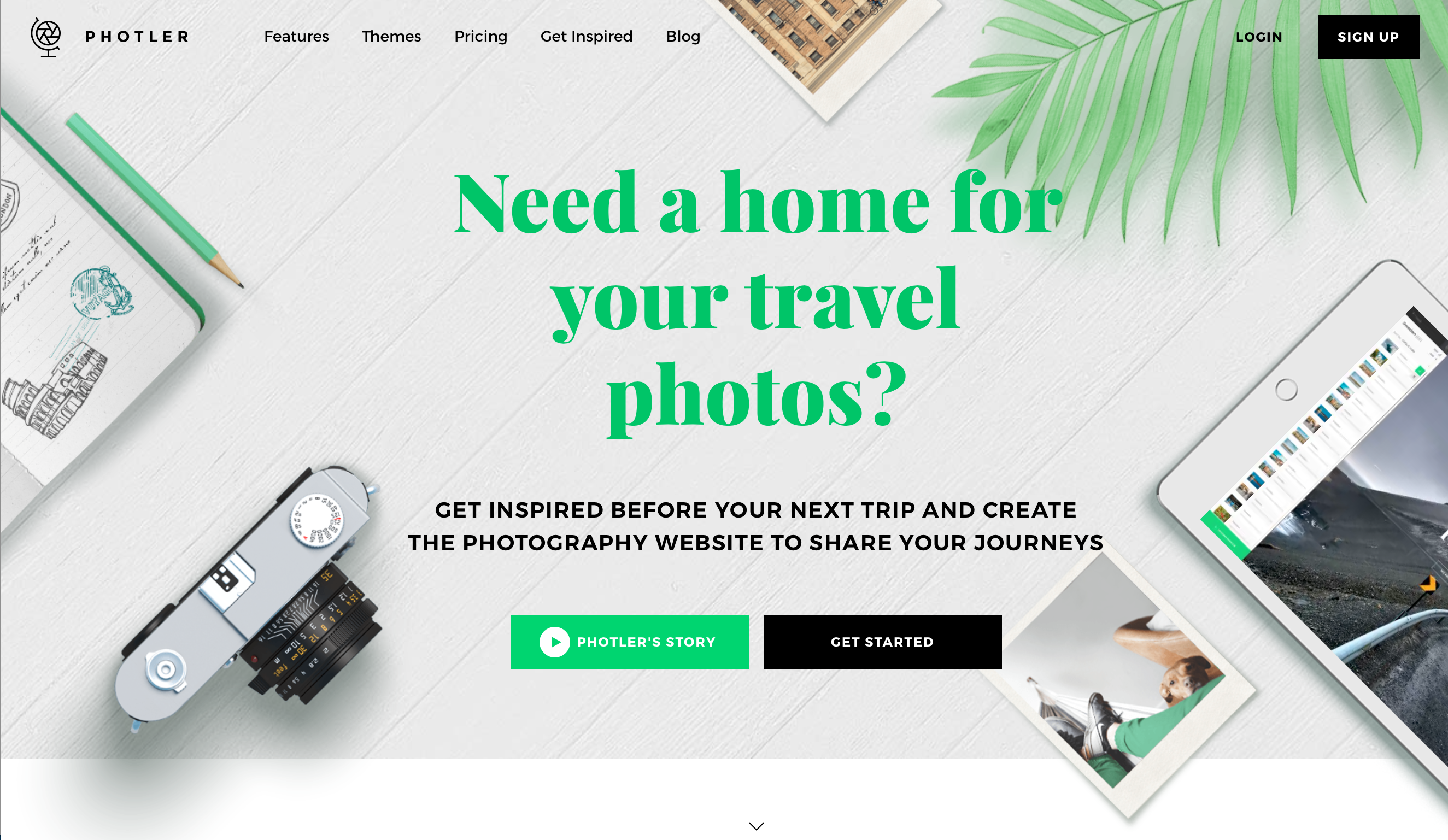
Photler Is A New Portfolio Site Builder Just For Travel Photographers

Personal website builders, like Squarespace, Photo Shelter, and Format to name a few, have been sprouting up as demand grows. Photo Shelter is an example that caters to a niche market (we photographers), but now there is one in its infancy that takes the niche concept a step further. Photler is designed specifically for travel photographers, by someone who is one.

Piotr Kulczycki has a pretty slick looking portfolio site  and was constantly being approached by people wanting to know details about his site, hoping to make their own look similar. As it turned out, it wasn't something as simple as a template within one of the major website builders – he had made it himself. Hence, Photler. He saw a demand and created his own solution for the multitudes.

Photler is paid only – no free tier – but offers a free 14 day trial for all plans. After the trial's expiration plans cost $2.99 or $5.00 per month for the low tier, depending on whether you opt to choose annual or monthly billing, $14.99/$19.00 for the mid-tier and $29.99/$35.00 for the top. The lowest cost option is for a '(name).photler.com' domain while the two mid tiers offer custom domain support. A nice bonus if you're an early adopter – right now it's easy to get any Photler domain you want. I signed up just to see what it was like and it automatically let me use my first name with no odd combination of digits or underscores. I don't think that's ever happened to me before, so get yours while it's there if this interests you.

[REWIND:] THE BEST PORTFOLIO BUILDERS FOR PHOTOGRAPHERS ACCORDING TO PHOTOGRAPHERS

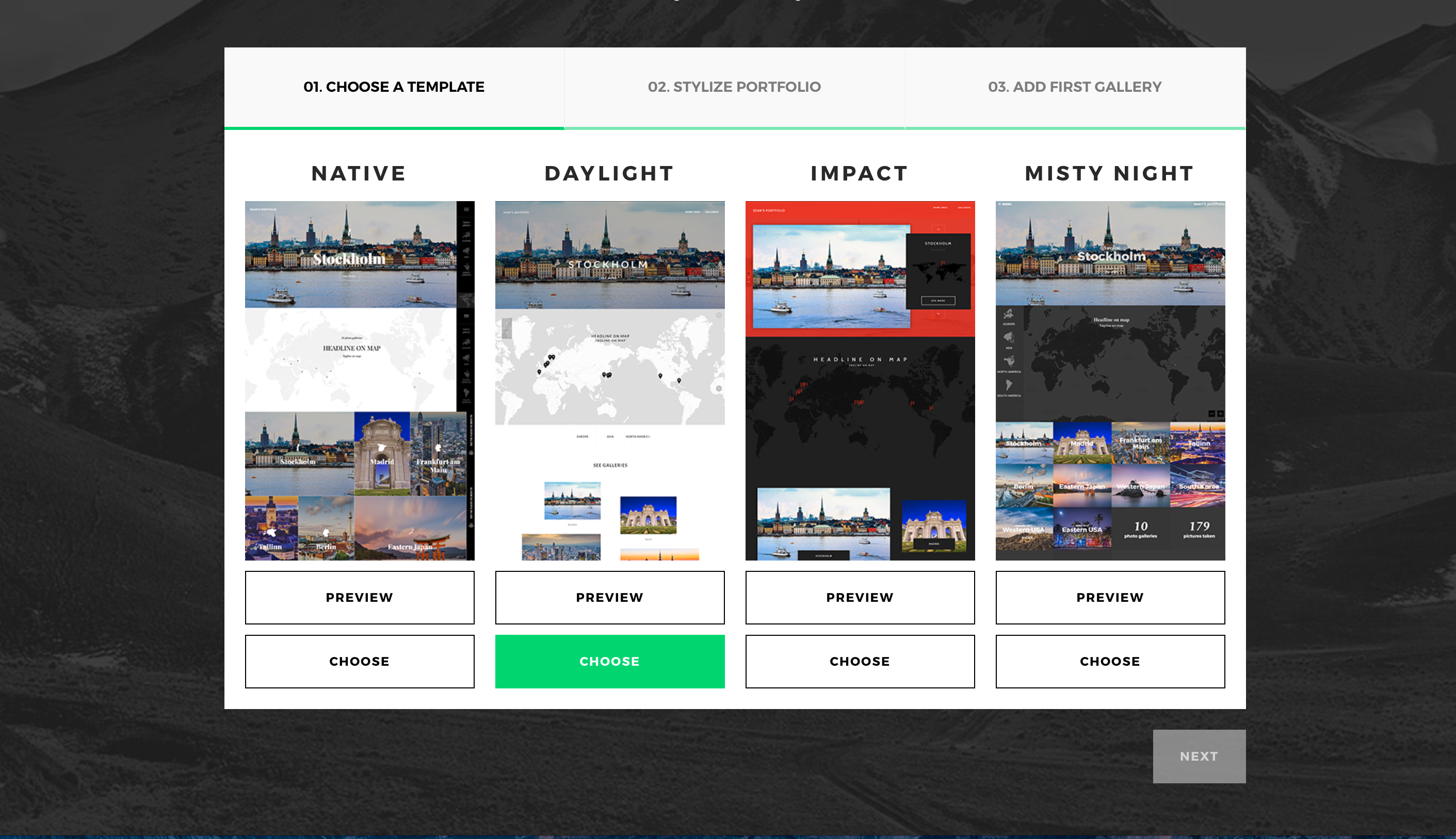
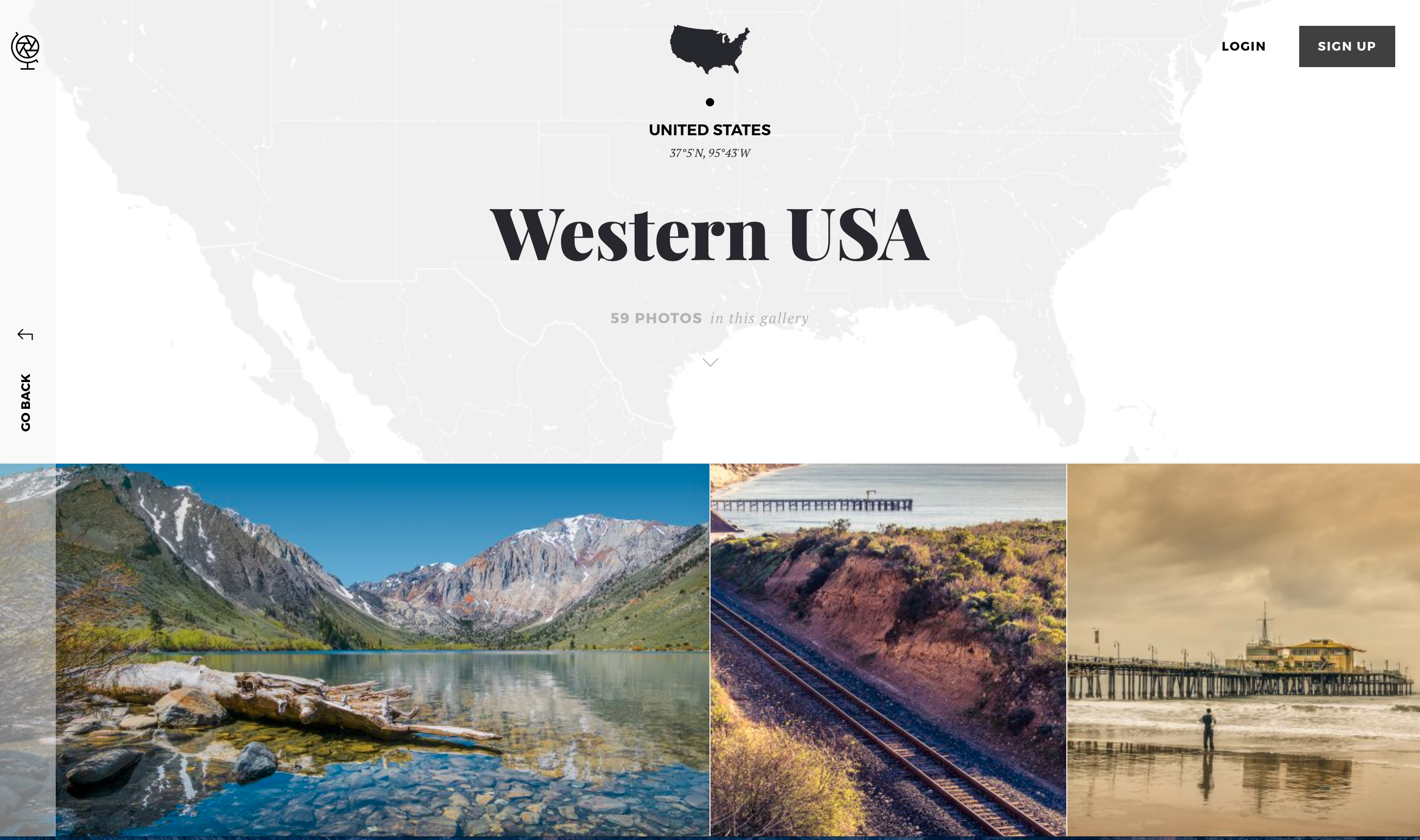
The sites themselves do look snazzy. They've got an aesthetically pleasing design and have a cool scrolling action. It's easy to see why there was so much interest in Kulczycki's personal site. The backend looks very much like Squarespace's, so if you know your way around over there you could hit the ground running with Photler, in theory.

The base subscription tier is just a portfolio site, but the upper two allow you to sell your photos through your site. The thing that sets Photler apart regarding e-commerce is that there is no commission. You get to keep all the money you make selling photos. There is also a section dedicated to featuring Photler galleries, which is worth a look even if you just want to see pretty pictures, not post your own, and this can drive viewers to galleries who may end up purchasing.

If you're a travel photographer on the lookout for a portfolio site builder, this one is may catch your eye. The top two tiers are a bit on the expensive side and only the highest one offers removal of Photler branding – something a little offensive in my opinion to those shelling out $19.00 per month for the middle plan – but they do offer a 50% student discount with an emailed student ID scan.


Source: Photler Is A New Portfolio Site Builder Just For Travel Photographers

Saturday, February 4, 2017

Android Tips – The Best Android Traveling Photography Apps – DIY in 5 Ep 39

Here are the 5 best Android apps for traveling photographers.

Camera ZOOM FX is an upgraded photo taking app that adds more features than any built-in app. It has features like an image stabilizer which waits to take a picture when your hand is steady and burst mode features that can shoot up to 50 frames a second. There's a free version to get you started.About the app: http://www.androidslide.com/Download: https://play.google.com/store/apps/details?id=slide.cameraZoom

The Photographer's Ephemeris tells you the time of sunrise and sundown, what direction the light is coming from, the location of the moon and more. Expect to pay a few bucks for this one.About the app: http://photoephemeris.com/tpe-for-androidDownload: https://play.google.com/store/apps/details?id=com.crookneckconsulting.tpeandroid&hl=en

NOAA High-Def Radar (U.S. only) gives you near real time radar images of weather in your area. You can also see forecast for the areas you want to go so you can plan ahead.About the app: http://www.weathersphere.com/products/Download: https://play.google.com/store/apps/details?id=com.weathersphere.noaa_hidef_radar&hl=en

Adobe Photoshop Express is a portable and free version of the popular desktop app with features like red-eye reduction, noise clean-up from low-light photos, collages, resizing and more. In-app purchase allow for additional features.About the app: http://www.photoshop.com/products/photoshopexpressDownload: https://play.google.com/store/apps/details?id=com.adobe.psmobile&hl=en

Lenstag lets you register all of your gear, including serial numbers, and is very handy for discovering any lost or stolen equipment. If you're looking to buy used equipment you can do a check of the serial number to see if it's been reported stolen or lost and if your equipment has been taken users can contact you if they come across it. It also scans checks the EXIF data from across the web to report any new photos taken using your camera.About the app: https://www.lenstag.com/Download: https://play.google.com/store/apps/details?id=com.lenstag.app&hl=en

Subscribe to Kingston: https://www.youtube.com/subscription_center?add_user=KingstonTechMemory

via Kingston Technology

You May Also Like:

Category: Data Center, Desktop, Hardware, Mobile, Monitoring Tags: Google Android, Memory
Source: Android Tips – The Best Android Traveling Photography Apps – DIY in 5 Ep 39

Friday, February 3, 2017

Models and fashion icons salute Riccardo Tisci and his work at Givenchy

From Naomi Campbell and Bella Hadid to Irina Shayk, Natasha Poly and photographer, Mert Alas, the freshly announced departure of Givenchy creative director, Riccardo Tisci, hasn't left the fashion world indifferent. In fact, in less than 24 hours, the Italian designer and his work at the house have been celebrated the world over on the internet. Here's a look at some of the tributes to the designer , who could soon take over as creative director of Versace.

Riccardo Tisci stood down from the helm of Givenchy to widespread acclaim from models, photographers, as well as editors of the biggest fashion magazines. As soon as the Italian designer's departure from Givenchy was officially announced, Thursday, February 2, major industry figures insti gated an outpouring of tributes to his creativity, skill, and his work at the fashion house. His 12 years of loyal service were celebrated in a flood of pictures -- including magazine covers, campaigns and catwalk shows -- shared on the Instagram accounts of personalities with whom he worked.

Star models

Bella Hadid, who, like many stars, is close to the Italian designer, looked back at her two years working with the Givenchy head, saluting Riccardo Tisci's "genuine love for the art, design and fashion." In a long text posted on her Instagram account, the young model notably declared: "You are a genius of a generation," adding, "You are an inspiration to me and so many others."

Italian model Mariacarla Boscono took a similar tone, posting around 10 photos on Instagram capturing previous collaborations with the designer. The 36-year-old model, who says she is very moved by the announcement, captioned several of the shots "Dreams come true."

Naomi Campbell, Irina Shayk, Candice Swanepoel, Lineisy Montero, Camille Hurel, Greta Varlese, Natasha Poly, Imaan Hammam and Joan Smalls were just some of the models who posted messages of friendship and goodwill, thanking the Italian designer and wishing him all the best for the future.

Models aren't the only ones paying homage to Riccardo Tisci, who struck up friendships with some of the biggest names in fashion, such as Carine Roitfeld, to whom he is very close. The journalist/stylist notably posted a photo of the designer's first couture collection for Givenchy in 2005, as well as a 2013 shot from a Givenchy campaign featuring Roitfeld and her daughter Julia, with the message "Thanks Riccardo! We are a family."

The famous photographer, Mert Alas -- who forms one half of the Mert & Marcus duo with Marcus Piggot -- also paid homage to Riccardo Tisci's work for Givenchy, the photographers having worked with the designer on several occasions. Posting a photo of himself with Riccardo Tisci, Mert Alas said "Congratulations for your great achievement at the House of Givenchy and good luck for the next chapter."


Source: Models and fashion icons salute Riccardo Tisci and his work at Givenchy

Thursday, February 2, 2017

Four Cool Gifts for Photographers

They say everyone and their grandma is a photographer these days, what with iPhones being such popular cameras and all. Whether they're shooting with a phone or a "real" camera like a mirrorless or DSLR rig, they may appreciate at least one of the four gift ideas we've gathered below.

* * *

PatentPrints' camera patent posters on Etsy. ($6–$40, depending on size and frame)Photo: Jorge Quinteros

PatentPrints' camera patent posters on Etsy. ($6–$40, depending on size and frame)

Photo: Jorge Quinteros

Camera Patent Posters »

Photographers who want to spruce up their desk area will appreciate these camera patent posters on Etsy. One of our favorites is the 1962 E. Sauer camera patent poster (which also looks awesome as a t-shirt).

Each print can be purchased in a variety of sizes and colors, and printed on your choice of card stock, copy paper, parchment, or parchtone. Prices range anywhere from $6 to $40 depending on size and whether you opt for a framed piece.

Orangmonkie Foldio2 foldable photo studio. ($75)

Orangmonkie Foldio2 foldable photo studio. ($75)

Orangemonkie "Foldio2" Foldable Photo Studio »

If you've got a photographer friend who often needs to capture shots of small products but doesn't necessarily want to set up a whole studio for it each time — or if they need to do it on the road — Orangemonkie's Foldio2 is the perfect solution.

It's a portable photo studio that unfolds from a briefcase-sized folio (with handle) into a 15″ x 15″ x 15″ light box that holds together magnetically, like so:

Turn on the built-in LED strip, adjust its brightness with the in-line dimmer dial, and you've got a nice little place to shoot professional-style photos and videos. Each Foldio2 includes four different-colored backdrops — white, gray, black, and green — for a variety of moods, along with a diffuser for the LED strip, which is handy for preventing visible light reflections (as mentioned in this review of the original Foldio).

J.B. Camera Designs' wooden camera grip-bases. ($50–$80)Photo: Steve Huff

J.B. Camera Designs' wooden camera grip-bases. ($50–$80)

Photo: Steve Huff

J.B. Camera Designs' Wooden Grips for Mirrorless Cameras »

An Oklahoma-based company called J.B. Camera Designs makes some pretty cool handcrafted wooden grips for mirrorless cameras. They come in your choice of light-colored bamboo or dark walnut, with a vertical post custom-machined out of solid aluminum.

In addition to giving your camera a unique look and solid feel, each grip is made in a well-considered way that allows full access to the camera's battery and memory card compartment — whichever model you choose. What's more, you won't have to worry about scratching up or dinging the bottom of your camera every time you set it down.

Photo: Steve Huff

Photo: Steve Huff

They have grips available for a variety of mirrorless cameras:

  • Olympus E-M5 Mark II — Walnut
  • Olympus E-M5 — Bamboo
  • Olympus E-M10 — Bamboo
  • Fuji X100T — Bamboo or Walnut
  • Fuji X-T1 — Bamboo or Walnut
  • Sony a6000 — Bamboo or Walnut
  • Grips for newer cameras than those listed above — such as the Sony a6500, Olympus E-M1 Mark II, and Fujifilm X-T2 — can be found at J.B. Designs' online store. (You'll have to select the camera model from the dropdown menu on the respective item page.)

    Hard Graft's "Blend" camera strap. ($135)

    Hard Graft's "Blend" camera strap. ($135)

    Hard Graft "Blend" Camera Strap »

    Hard Graft's "Blend" camera strap is the perfect…erm, blend of style of comfort. Bad puns aside, you'll barely notice it's there while wearing it.

    Measuring a fixed 51.2″ x 1.6″ (130cm x 4cm), this strap is made from structured cotton webbing — stitched in a herringbone pattern — with Italian leather details at each end. It fits most cameras and includes 0.39″ (1cm) metal split rings for attachment purposes. It also sports a small white leather patch with subtle, embossed branding.

  • Share on Twitter
  • Share on Facebook
  • Pin on Pinterest
  • You May Also Like Oly-OMD-EM5-Mark-II-Review-2The Olympus OM-D E-M5 Mark II Review Oasis12The Amazon Kindle Oasis Review OLYMPUS DIGITAL CAMERAThe DDC Stuff Sheath About

    We publish every day with reviews, photo essays, gear guides, articles, and links to awesome and interesting things.

    Sponsored By Home Find focus. Own your time. Gain traction with your goals. Supported By

    Ad Powered by Fusion


    Source: Four Cool Gifts for Photographers

    Wednesday, February 1, 2017

    Three Common Mistakes Beginner Photographers Always Make

    There are plenty of mistakes beginner photographers make along the road to becoming a seasoned pro. While it's important not to be discouraged by small, correctable mistakes, it's equally as important to acknowledge them. In this short video tutorial, Mango Street Lab lay out three common mistakes that beginner photographers make in a clean and understandable way. 

    Blown-Out Highlights

    Perhaps you're purposefully blowing out the highlights in your images for the esthetic appeal. That's one thing. If you're unintentionally blowing out the highlights in your images, there are several things you can do about it. 

    Adjusting your exposure settings for the brightest part of your image will prevent lost detail in the highlights. It will, however, require some work in postproduction to bring the detail back out of the shadows. This may take a little work to find the right balance, but once you've lost details in your highlights, they're gone, so becoming familiar with your camera's settings and learning how to a properly expose your images is worth the time. Shooting in raw file format is necessary in my opinion for the best results.

    Posing

    While it's perfectly fine to get ideas for poses from various sources online, it's best not to be 100 percent reliant on them. Learn how to get a playful yet professional banter going with your clients that will carry throughout your session and you'll be pleasantly surprised with the number of opportunity for great shots with natural expressions and real emotion present themselves. 

    Disregarding the Light Source 

    When given the opportunity to choose a location and time of the day, you should be choosing based on the quality of available light in most cases. Avoiding harsh overhead light (mid-day sun) is good practice. 

    Let's Be Honest

    What mistakes did you make most often when you first began shooting? What are a few things you see photographers do that you might be able to throw some advice towards? Share in the comments below. 


    Source: Three Common Mistakes Beginner Photographers Always Make