Sunday, December 11, 2016

Photos offer glimpse into human side of conflict — photojournalists

AMMAN — Although a tough job, photojournalism is an important medium to document events around the world and to capture the essence of certain moments, by representing the human side of conflicts and depicting events as they are, photojournalists said recently.

Rafael Yaghobzadeh, a French photographer, became more involved in photojournalism and news coverage in 2011, with the eruption of revolutions across the Arab world.

Born into a journalistic family, he started taking photos following the lead of his father, who was a photojournalist at the age of 11. 

He started his professional photojournalism career in 2011, when he went to Tunisia and Egypt. He also covered the Taksim Square protests in Turkey in 2013. In 2014, Yaghobzadeh went to Kiev to cover the Ukrainian revolution.

After he had seen the reality of events in rallies, marches and demonstrations, he felt they had to be documen ted through photos instead of news coverage. 

"I've always watched the TV channels, but when I went to Gaza during the war, it was really more about personal experience," the photojournalist explained, noting that he wanted to highlight images from a personal point of view.

He went to Tunisia five days after January 14, 2011, which was when the Tunisian revolution erupted, where he took photos of Tunisians during demonstrations.

In 2013, he visited the Zaatari Refugee Camp in Jordan as his first experience with refugees.

"Journalists and photojournalists became targeted in a way. Every time I face things, I remember that's the game of it, that's how its challenges [are] and how you can't go far because there are limits in order not to lose control," Yaghobzadeh added at a panel discussion organised within the seventh Karama Human Rights Film Festival, which concluded on Saturday.

Bu t for photographer Agnès Montanari, photojournalism is about capturing the social aspect of things — how things work, the internal dynamics of pictures and representing people the way they want to be represented.

"The most important aspect to me is the respect of people. For me, taking pictures is like meeting someone; it's a good opportunity to meet someone you would have never met otherwise… So I want that meeting to be successful."

"At the end of the day, I want to say: 'yes I took pictures but I have met someone and I know who that someone really is'," Montanari said.

Since she moved to Jordan in 2012, the photojournalist said she had been not only interested in documenting events through pictures, but also teaching photography to refugee children. 

"Photography sometimes is seen as a tool that takes away the dignity of the people. But when these people [refugees] take pictures themselves, they regain their dignity; they are the only people able to represent themselves."

To people living in crisis, it is "less frightening" when they are involved in the documentation of real-life events through pictures or documentaries, Montanari argued. 

"In a way, you have to forget about yourself. You are not you with your character. Try to understand who these people are and share," she added.

"I thought that having a camera would not allow me to meet people. For me, I thought the images were in my head, but a camera is a frightening object, because your face disappears behind it, people don't know who you are," Montanari told The Jordan Times.

When she went to Yemen, the photojournalist said the most difficult part was approaching women. "I've always said being a woman photographer is a huge advantage than being a man… people accept you more, in the Arab world, we have access to both men an d women."

"Try to see. To feel with the people, that is what makes the picture eventually different. The time you take pictures, you are alone — you don't talk. You are alone and outside of the scene. Then, there is a time when you put your camera aside and you talk to people."


Source: Photos offer glimpse into human side of conflict — photojournalists

Saturday, December 10, 2016

Check out the hot neighborhood at the center of Nashville's cultural boom

At Nashville's hip, hot Marathon Village, I run into Darek Bell. For Bell, there's no finish line. The Corsair Artisan distillery co-founder pours his spirits while dressed in a 1920s bartender's outfit, dapper from gold-chain pocket watch to Gatsby-esque straw boater hat. In barely six years, Corsair's spirits have won 41 medals at international competitions and wooed connoisseurs worldwide.

Bell is an example of overachievers making Music City a powerhouse in all kinds of creative pursuits.

You'll find the pleasurable fruits of their labors bubbling up in revitalized areas with the kind of big spaces and low rents that help ventures take root. 

One prized secret of locals is Marathon Village, barely 10 minutes west of downtown's honky-tonk heart.

Darek Bell makes and serves terrific, creative spirits at Corsair Artisan Distillery in Marathon Village in Nashville. Ro   bin Soslow

Darek Bell makes and serves terrific, creative spirits at Corsair Artisan Distillery in Marathon Village in Nashville. 

Robin Soslow

"This is such an exciting time to be in Nashville, with the cultural boom happening on all fronts," says Buddy Kite, media director at Frist Center for the Visual Arts, where I'd gawked at sexy models -- cars, that is -- in the "Bellissima! Italian Automotive Renaissance" exhibition before heading to the former quarters of Marathon Motor Works. The massive industrial-chic site now revs visitors' motors with a medley of temptations.

Marathon Motor Works manufactured innovative automobiles designed by an engineering prodigy named William Henry Collier. The cars drew buyers from around the world to Tennessee, from Chile to China. But by 1914, Marathon's executives motored on and production ceased.

Envisioning a new model of adaptive reuse, Nashville entrepreneur Barry Walker bought four blocks of red-brick buildings erected between 1881 and 1912, including Marathon's 130,000-square-foot former factory. His makeover preserved the spaces' historic character and architectural integrity.

The complex's four dozen tenants include artists, photographers, Lightning 100 indie radio (listen for Nashville talents like Blackfoot Gypsies and Shane Piasecki), a spa and tantalizing treats to reward you for a day's visit.

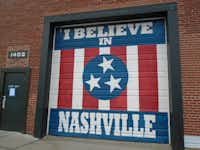
This bold mural at Marathon Village has become a popular selfie-taking spot for Nashville visitors and locals alike. Robin Soslow

This bold mural at Marathon Village has become a pop ular selfie-taking spot for Nashville visitors and locals alike. 

Robin Soslow

The "I Believe in Nashville" outdoor mural. Musician-artist Adrien Saporiti's hit place-making image is a popular selfie setting. It has appeared in national magazines and soft drink ads.

Bang Candy Company. Their candy is dandy. How about marshmallows hand-dipped in Belgian chocolate and flavored with chile pepper, toasted coconut almond, smoked cherry and rose cardamom? The confectionery also peddles sodas and giftable syrups made on-site.

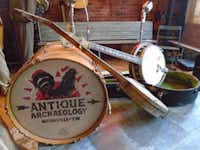
Find deals and rare collectibles at Antique Archaeology in Marathon Village. Robin Soslow

Find deals and rare collectibles at Antique Archaeology in Marathon Village. 

Robin Soslow

Antique Archaeology. Treasures here have appeared on the American Pickers TV show. Sharp-eyed roaming picker Mike Wolfe crams this cavern with seriously cool finds, drawing antiquers from afar. Musical instruments? Housewares? Lighting? Hats? Books? Vintage signs? Quirky conversation pieces? It's all here.

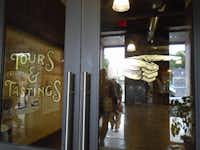
Come on in for a fun tour and memorable tastings at Nelson's Green Brier Distillery in Marathon Village. Robin Soslo

Come on in for a fun tour and memorable tastings at Nelson's Gree n Brier Distillery in Marathon Village. 

Robin Soslo

Nelson's Green Brier Distillery. This is a funhouse of fine whiskeys made in small batches. The owners resurrected their great-great-great grandparents' business that produced sour mash whiskey between 1870 and 1909. Prohibition led to its closure.

The new distillery opened in 2014. Many spirits are made using family recipes, some deduced from old grain receipts. Hits include Belle Meade Bourbon and a new bourbon aged in cognac casks (you'll taste notes of brown sugar, vanilla and fruit).

Marathon Music Works. Catch live music in a cool setting. William Collier's Room there serves cocktails, bourbons and coneys. Nashville artist James Willis sketched the bar-top design from original Marathon Motor Car blueprints. The bar is made from reclaimed wood salvaged from the auto plant.

Garage Coffee Company. Pair fresh roast from "Road Rage" to decaf "Anger Management" with baked goodies or zesty salads.

The Old Time Pickin' Parlor. Musicians with tastes from bluegrass to Delta blues come for its stock of banjos, mandolins, guitars and handmade Doom Ray straps.

"O" Gallery. Actress and painter Olga Alexeeva's fine art outpost displays brightly colored, high-energy, music-themed works.

Island Cowgirl. Designer Heather Charlick's romantic and rugged pieces bear messages from "Hell on Heels" to "Blessed." Motifs run from hearts to flowers to dog paws. Tanks and T-shirts, too.

Lorraine Frances. Her bling that sings includes copper and sterling creations like the Plumber's Wife's Heart Cuff, squiggle earrings, lost-gem chokers and medieval chain-mail-inspired bracelets.

D. Luxe Home. Industrial-chic salvage treasures, furniture, vintage lamps and artworks will make good souvenirs for friends and yourself.

Grinder's Switch Winery. The family-owned business is ranked by Southern Living among the South's Best Vineyards. Take a seat and taste at the 22-foot-long barn-wood bar.

Pure Spa. At this cheerful toxin-free salon, pamper your hair, lashes, skin and body. The spa menu includes Swedish and therapeutic massage, trigger point therapy and passive stretching.

While at Marathon Village in Nashville, sip an Old Fashioned made with award-winning craft spirits at Corsair Artisan Distillery. Robin Soslow

While at Marathon Village in Nashville, sip an Old Fashioned made with award-winning craft spirits at Corsair Artisan Distillery. 

Robin Soslow

Corsair. What a fitting moniker for this brewstillery, given the Prohibition-meets-privateer vibe. After a tour revealing the awesome copper pot still, sip at the spirits and beer bars. Bell, a wizard who knows the science and black magic of distilling, has converted gin haters into gin lovers.

Tasting highlights: the hickory-smoked whiskey Rymageddon and alternative-grain award winners Oatrage (oats), Buck Yeah! (buckwheat) and the earthy-nutty Quinoa Whiskey.

The overachieving distillers' other creations include Grainiac 9 Bourbon, Elderflower Bohemian Whiskey and pumpkin spice moonshine.

Tip: The $6 flight reduces the decision-making challenge.

A bit of advice: Start your Marathon Village marathon early. That way, you can indulge at a leisurely pace.

Robin Soslow, a writer and photographer based in the South, can be reached at rsoslow@gmail.com.


Source: Check out the hot neighborhood at the center of Nashville's cultural boom

Friday, December 9, 2016

Astoria Bank Presents LaGuardia Student Photography Exhibit, 'LIC Past, Present & Future'

LAKE SUCCESS, N.Y., Dec. 8, 2016 /PRNewswire/ Astoria Bank and LaGuardia Community College have unveiled a new student photography exhibit at Astoria Bank's new Long Island City Branch at 26-26 Jackson Avenue (at Purves St.). Members of the public are welcome to visit the branch to view the exhibit, titled "LIC Past, Present & Future," exploring the evolution of the vibrant neighborhood of Long Island City ("LIC").

At an opening reception held recently at the branch, more than a dozen student photographers from LaGuardia Community College were joined by friends, family, professors and administrators, as well as members of the local business community who admired the students' work.

The exhibit, which runs through April 2017, celebrates LIC's history as a hub of industrial design and manufacturing, its present day as a rapidly-developing neighborhood, and predictions of what its future may look like. LaGuardia's commercial photography students were asked to canvas the neighborhood to capture its energy, community and markers of cultural significance. It was curated by LaGuardia Community College Photography Program Director Scott Sternbach and his team.

The exhibit's theme is especially meaningful for Astoria Bank, a full-service community bank which was established in Long Island City well over a century ago, in 1888, as well as for LaGuardia Community College, which has been a prominent institution in LIC since 1971.

"Giving our students an opportunity to showcase their work in a well-trafficked local business is enormously meaningful for our photography students," said LaGuardia Community College President Gail O. Mellow. "This gives them a taste of life as a working photographer, and provides valuable learning about all it takes to curate and execute a photography exhibit from start to finish. We're enormously grateful to Astoria Bank for supporting our students in this way."

In recent months, Astoria Bank has partnered with LaGuardia Community College to fund a scholarship program for students pursuing associate's degrees in commercial photography, and is also providing financial literacy workshops to help LaGuardia students better manage their personal finances now and into the future.

"We are dedicated to making a difference in the Long Island City community and are proud of the wonderful partnership we have with LaGuardia Community College. Their students are passionate about developing their skills and careers, and we're excited to showcase their work in our branch for the community to enjoy," said Astoria Bank Executive Vice President Brian Edwards.

The public is welcome to visit the exhibit during the bank's convenient operating hours, from 9 a.m. to 5 p.m. Monday, Tuesday, Wednesday and Friday; 9 a.m. to 7 p.m. on Thursday, and 9 a.m. to 3 p.m. on Saturday.

About Astoria Financial Corporation

Astoria Financial Corporation (NYSE: AF), with assets of $14.8 billion, is the holding company for Astoria Bank. Established in 1888, Astoria Bank, with deposits in New York totaling $8.9 billion, is the second largest thrift depository in New York and provides its retail and business customers and local communities it serves with quality financial products and services through 88 convenient banking branch locations, a business banking office in Manhattan, and multiple delivery channels, including its flexible mobile banking app. Astoria Bank commands a significant deposit market share in the attractive Long Island market, which includes Brooklyn, Queens, Nassau, and Suffolk counties with a population exceeding that of 38 individual states. Astoria Bank originates multi-family and commercial real estate loans, primarily on rent controlled and rent stabilized apartment buildings, located in New York City and the surrounding metropolitan area and originates residential mortgage loan s through its banking and loan production offices in New York, a broker network in four states, primarily along the East Coast, and correspondent relationships covering 13 states and the District of Columbia.


Source: Astoria Bank Presents LaGuardia Student Photography Exhibit, 'LIC Past, Present & Future'

Thursday, December 8, 2016

PHOTOS: Week in photos by APP staff photographers

Herb Weber of Lakewood is a veteran of WWII. He served in the U.S. Army from 1943-45 and took part in the invasion of Casablanca, Corsica, Southern France, and Germany earning four Battle Stars, The Army of Occupation of Germany medal, The European-African Eastern Campaign, the Bronze Star for his life-saving efforts, and Purple Heart for wounds received in Germany. Lakewood, NJ Thursday, December 1, 2016. @dhoodhood Doug Hood


Source: PHOTOS: Week in photos by APP staff photographers

Wednesday, December 7, 2016

With the pending sale of SFUAD delayed, students are still mostly in the dark

Writers feverishly revise their final portfolios, photographers scour their surroundings for mid-day standalones and theater majors prepare for upcoming shows. The semester at Santa Fe University of Art and Design is trudging towards an end, but the future of the college remains unclear.

Laureate Education, a multinational private education corporation, announced plans this spring to sell the college to Raffles Education, a Singapore-based company which has a portfolio of 26 institutions, mostly art and design schools in Asia. The pending sale, however, is moving more slowly than initially predicted.

Students tell SFR they are nervous over the uncertainty surrounding the transition. Will my degree be legitimate? Will I be taken seriously by future employers? Am I wasting my time and money?

Others are hopeful. Some are unaware. Most are suspicious.

Interim President Maria Puzziferro wrote a statement released on Dec. 1 reassuring students that Laureate and Raffles "remain committed to this process" and that the school's accreditation through 2026 will not be impacted by the delayed change in control. The Higher Learning Commission, a regional accrediting agency, won't make a decision about the proposal until at least February, she wrote.

Students say they're not getting the message. Some told SFR they did not see the emailed notice from Puzziferro until a faculty member posted it on a private Facebook group.

Puzziferro tells SFR that "technical difficulties" kept some information from reaching students as intended. Her office sent two emails to students and faculty shortly after the Thanksgiving break and only later learned many of the intended recipients had not received them.

She says she is looking forward to Raffles and what it will bring to SFUAD. "Raffles really is a leader in global art and design education," says Puzziferro. "Raffles opens up a lot of possibilities for students to study abroad; the potential is just unlimited."

Questions about whether students at the school would continue to qualify for financial aid are part of the change in control process, she explains, and if Raffles can't enable students to earn federal financial aid, the sale won't be approved.

Asked about an earlier SFR report that focused on Raffles' problems in other countries, including in Vietnam, where the school faced sanctions over offering degrees despite only having authorization to issue vocational diplomas, she says she's not concerned.

"You have to be careful, especially in understanding Raffles' history with other schools, in countries where we don't understand their regulatory environment," she says.

Puzziferro says SFUAD's accreditation will remain in good standing regardless of whether the sale goes through and she is working with SFUAD's spokeswoman, Rachael Lighty, to organize a forum in early January to communicate with students.

"I learn information about a school I pay so much for from local newspapers and friends. "       -Alison Gamache, student

That would be welcome to senior creative writing major Alison Gamache.

"I have not received one email about what the hell is going on," Gamache tells SFR. "I learn information about a school I pay so much for from local newspapers and friends."

But not everyone is pessimistic about the proposed change. Nicholas Thomas, president of Student Voice, a campus advocacy group, says Raffles is a better fit to run SFUAD than Laureate, the Baltimore-based company that doesn't typically operate arts schools. Thomas tells SFR he's frustrated with the rumors SFUAD will lose its accreditation under new ownership.

He notes that the Higher Learning Commission, the accrediting agency, wouldn't approve the sale if it would threaten students' degrees. "We aren't going to lose our accreditation," Thomas says. "Not gonna happen."

Junior contemporary music program major Joseph Gordon says he's been annoyed with Laureate's lack of investment in his personal educational priorities. He hopes Raffles will spend big bucks on new music equipment.

Gordon wants a career in music technology—mixing, editing and recording—but it's not a major offered at SFUAD.

"I hope that Raffles, a very rich corporation, will put a lot of money into the infrastructure of our school," says Gordon. "We can't even have some classes because all of our technology is breaking."

Another music major, sophomore flutist Sammi Gilbert, is hopeful for the future but wary of the administration's miscommunication. Early on, she says, representatives from Raffles seemed to be responsive to what students want.

"I'm optimistic about the future of the school," resident advisor and student life advocate Emily Curley tells SFR. Curley is a junior technical theater major in the performing arts department with a specialization in sound design. Although Curley is pleased with her program, she wants a course specific to sound design and hopes Raffles can provide that for the technical theater department now and in the future.

"I don't feel like the changes will occur while I'm here. … I'm really close to graduating and don't expect changes within a year," Curley says. She prefers the Higher Learning Commission, Raffles and Laureate take their time ensuring a positive future for the school.

Santa Fe city officials in September met with representatives from SFUAD and Raffles, as well as the Higher Learning Commission. Mayor Javier Gonzales did not attend.

In a letter to the accrediting agency's executive vice president for governmental affairs, however, Gonzales wrote, "Especially at this critical time, as we launch plans to redevelop the St. Michael's Avenue [sic] corridor at the geographic heart of this community and with SFUAD as its western anchor, losing this partnership would be a significant step backward, for the young people we serve and the community as a whole."

SFR reported in October that Raffles failed to follow education regulations in at least three countries, leaving students with degrees that are unrecognized in their own countries. Laureate has its own legal issues, including a recently settled lawsuit claiming that the company stretched out the degree process, forcing students to pay more money.

Kim Jones is a junior at SFUAD who is interning in the SFR newsroom.


Source: With the pending sale of SFUAD delayed, students are still mostly in the dark

Tuesday, December 6, 2016

A Quick message from everyone helping out with Help Portrait today

Today is a very special day.Today is Help Portrait day.

The whole year we are busy earning money with photography but today it's the time to give back. People that don't have the opportunity to be able to afford a photograph taken by a professional photographer are welcome today in a lot of studios worldwide where professional photographers give them an unique portrait.

Do you also want to join help portrait visit www.help-portrait.com

In my opinion everybody should.

Share
Source: A Quick message from everyone helping out with Help Portrait today

Monday, December 5, 2016

Our family in Sunset magazine!

sunset-magazine-december-2016-hither-and-thither-1 sunset-magazine-december-2016-hither-and-thither-1 sunset-magazine-december-2016-hither-and-thither-2

Some of you who follow along on Instagram may have already seen the news, but I'm thrilled to share that we're in Sunset Magazine this month! I've been reading Sunset (and saving back-issues) for as long as I can remember, and I can't believe that one with our family will be shelved alongside now!

Here's a closer look…

screen-shot-2016-12-04-at-3-33-22-pm

The team from Sunset came out last January—almost a year ago—and we got to re-create Christmas one more time before putting away all of the decorations. Aron came home early from work and the kids skipped school, so it really did feel like a special holiday. I remember everyone—there were two photographers, Tom Story and an assistant, two home editors, a stylist, Mikhael Romain, and her assistant—who stopped to listen to Hudson singing all the words to a Sound of Music song he'd just learned, and thinking they were so kind (and indulgent). The kids had such a great time.

screen-shot-2016-12-04-at-3-33-58-pm screen-shot-2016-12-04-at-3-33-01-pm

And why wouldn't they? Besides being surrounded by such nice people, they got to re-live some of the best parts of the holidays. We decorated a cake, made a popcorn garland, and opened up the advent calendar.

The advent calendar has become one of my favorite new traditions. We fill each drawer with something special to do that day—from decorating the tree, to donating toys, to watching The Snowman and eating a candy cane. I originally wrote about it after getting the idea from a friend.

Holiday traditions, new and old, was the theme of the piece, and I actually wish I'd recorded the interview for myself, as only so much could be included in the magazine. The more we spoke, the more details I'd recall—the way my family would hold hands and sing "Silent Night" instead of saying Grace, or the way Aron's family would prepare to go out and look at Christmas lights in the neighborhood with plates of cookies, made from generations-old recipes. There are so many details that go into the holidays, that it's easy to forget them all. With children so young, we are still getting to pick and choose our favorite traditions to create memories of our own.

screen-shot-2016-12-04-at-3-34-13-pm screen-shot-2016-12-04-at-3-31-57-pm screen-shot-2016-12-04-at-3-32-17-pm

For lunch we ordered Thai food and everyone had a slice of chocolate cake—before going outside to roast marshmallows. It turned out to be a very rainy and windy afternoon, so each of us grabbed brooms and rakes and worked together to clear the patio for those last shots outside.

It was such a fun, memorable day!

screen-shot-2016-12-04-at-3-36-47-pm

Here are some of the posts that helped inspire the scenes:

Homemade peppermint marshmallows (and s'mores roasting)

A Yule log Layer Cake (an alternative to the traditional bûche de Noel)

Creating an Experience Advent Calendar

"The Magazine of Western Living" has different editions depending on where in the Western U.S. the subscriber is based in order to keep its local travel and season planting suggestions most accurate, which means it's one of my most trusted sources for good daytrips—a rare gem! However, if you're not in its prime circulation area, you can still find the content online.

You can read our article in its entirety here: "How to create magical family Christmas traditions,"  written by Elizabeth Jardina and photographed by Thomas J. Story.

P.S. Natalie Bowen, who contributed a series of floral design posts here, made all of the arrangements for the story. They were incredible! (Look at this one!)

[All photos, excepting those top two of the magazine, by Thomas J. Story for Sunset Magazine.] Related posts: Three Months Architectural Pottery (and some Friday links) Getting ahead of the holidays Children's Stories Around the World
Source: Our family in Sunset magazine!