Even with all the notes and advice, it's typically a tough job to find a quality monitor in any price range. This is why I've decided to hand you my top recommendations as of November 2017. After sifting through literally hundreds of monitors, I've distilled five classes of monitors, among which are Fstoppers top recommendations in either class.
As a photographer, try to think of a monitor as a translator. What you're doing in post-processing gets translated to what you see. The quality of the translations determines how accurate the feedback loop between doing and seeing is. You certainly wouldn't want to get anything lost in translation. As such, it's important to invest in a quality monitor.
Calibration and WorkflowThere's a lot more to accurate color and luminosity representation than just throwing money at Amazon or B&H. In the previous article, I've laid out some of the foundations that go into post-processing. These recommendations come from my experience as a professional fine-art photographer, where I need a uniform display of color palettes among varying media.
We've also discussed what to look for in today's monitor market and we've covered that TN-TFT panels are more responsive and geared towards gamers rather than image-editing enthusiasts. I want to stress again that it's important to accurately calibrate your monitor if you're expecting the very best results from either of the following top monitor recommendations.
At less than $ 200, you'd be hard-pressed to find a better deal than this 23" IPS monitor from ViewSonic. It's been around for a couple of years and its price/feature list ratio hasn't been surpassed as of this writing. While the monitor doesn't cover AdobeRGB, it does feature 8-bit color depth, which is quite rare in this price class. This is photo-editing on a shoestring budget.

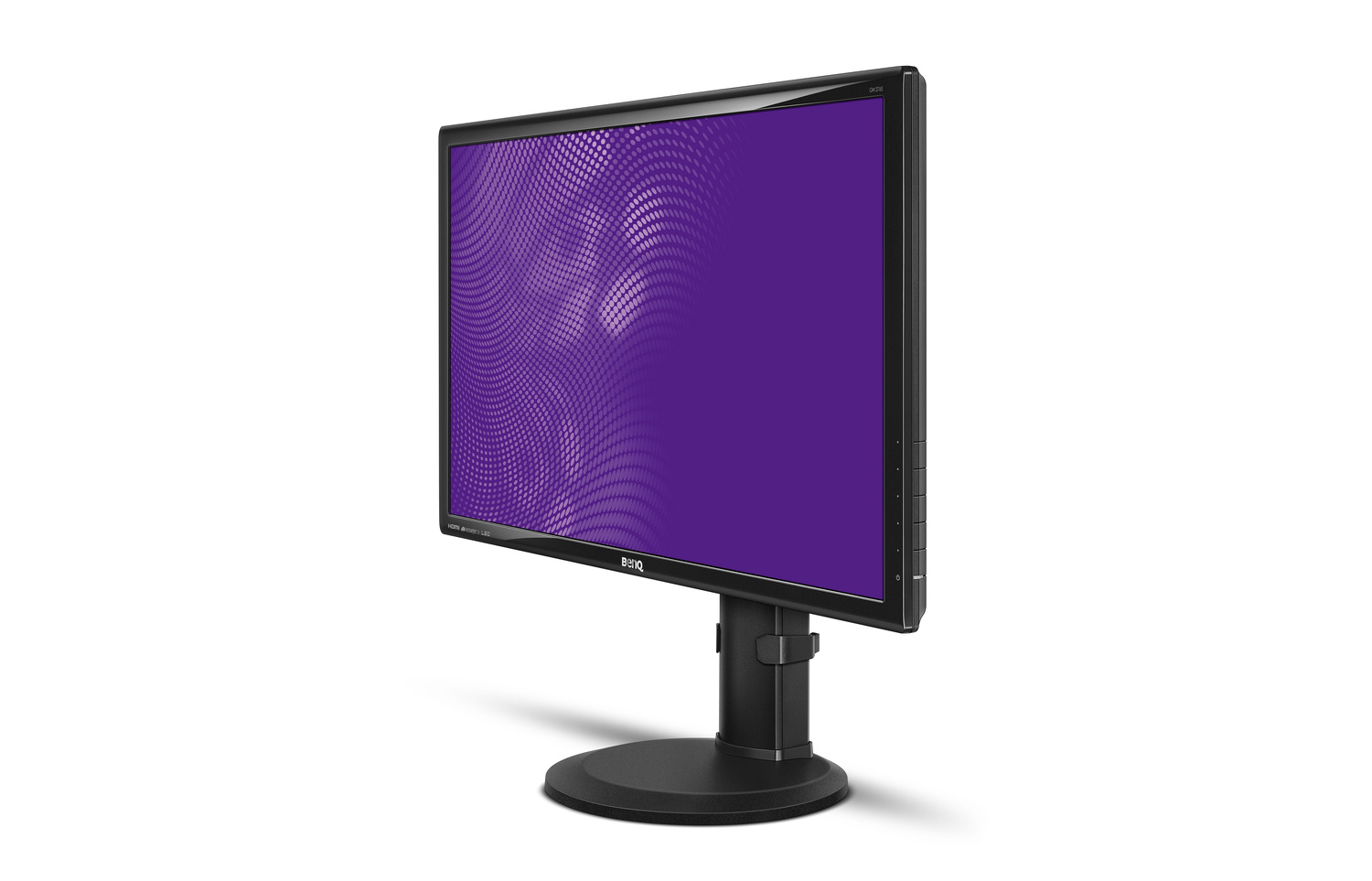
There are hundreds of IPS-panels when we enter the mid-range market. But if we're looking at absolute specs and compare reviews on the web amongst the best-tested monitor in this difficult price range, there isn't anything that comes close to this popular 27" monitor from Benq. Be aware that the monitor does need a bit of a warm-up period as it uses CCFL backlighting.
Once we enter the high-end market in photography monitors, the playing field thins out but it gets more difficult to find the best among the ones that remain. However, if we take a glance at the feature list, we find that this is one of the few monitors in this price class that features a 10-bit display and a 14-bit 3D LUT. There has yet to appear a negative review of the SW2700 on the web because when this monitor is properly calibrated, it's one of the best that money can buy.

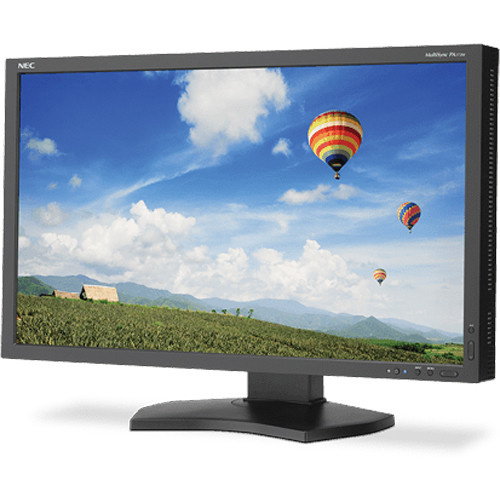
Moving into the higher echelons of image editing monitors, a couple of brands remain. Eizo, Dell, and NEC are the long-time players in this area. While Dell monitors in this price range suffer from mixed reviews, Eizo and NEC have in common that their tests live up to the expectations as a result of their rich feature list. I've singled out the 27" PA272 because of its lower price point and excellent test results from multiple sources. If you have $1300 to spend, look no further.
Working professionals in the image and video editing business are paid for accurate and uniform color representation. As such, they require the best of the best. Why have I chosen another NEC monitor? Honestly, I don't care much for brands at all, I'm looking at features first, go on to comparing prices and browse the web for impartial test results. At $ 2800, you get an UHD (3840x2160) monitor that displays 99,2 % of the AdobeRGB gamut, but it's almost 5" larger than the monitor in the high-end recommendation. If you're spending more, you might as well get a very tangible upgrade for the increased price.

Is it worth waiting for a better monitor to come out? Well, I can say that it's highly unlikely that there will be a good OLED contender in any of the price ranges we've discussed. LCD-displays are tried and tested and have a very long lifespan. That can't be said about OLED technology yet. I wouldn't hold my breath waiting for a better monitor in any price class if you're in the market right now. Take the budget and midrange monitors for example – These ViewSonic and BenQ babies have been among the best money can buy for four and three years, respectively. They may well be superseded by better technology for the same amount, but it may take a while. And would you really wait another couple of months to process your photos?
Hopefully, I've made your choice a bit easier. If you have better recommendations than either of these, do let me know in the comments. If you have the data to back it up, I'd be happy to put it up here.
Source: The 2017 Monitor Buyers Guide for Photographers: Top Recommendations

 "I carry a variety of gear depending on what type of shoot I am doing. It's always about trying to find a balance between weight, versatility, the difficulty of shooting location, the difficulty of activity, and whether I am shooting video, stills or both. Most recently, I was working on my current feature documentary project where I was directing and filming but had also been asked to shoot the feature print story simultaneously. I generally try to avoid this type of scenario because I feel like I have to make a lot of compromises and end up not doing any of it particularly well. But in this case, I didn' t have a choice. The shoot required a wide range of coverage including vérité film scenes, photojournalistic coverage of day-to-day life, and filming and shooting stills of high-angle big wall climbing. I think it is a good example to look at since I needed a quiver I could shoot video and shoot stills within multiple environments. Here is the basic kit I traveled to location with. This equipment would get paired down depending on what I was shooting for the day." — Jimmy Chin CamerasEOS-1DX Mark II by Canon $5,699EOS 5D Mark IV (back up camera) by Canon $3,299
 "As an adventure photographer, my kit is ever-evolving thanks to the numerous environments I choose to shoot in. I call the road worldwide home; however, I return to Australia fairly often for the chance to reset my bags for upcoming adventures. I typically favor wider lenses as my work often involves a lot of space in the image. It's not a case of creating a pretty picture with a small figurine in a grand landscape that is often seen on social media. It's the desire to tell a story of that person or athlete in their environment as I wait for the right subtle moment for things to fa ll into place. I try my best to strip down my gear since it has to be carried on my back, but I also prefer simplicity and focus on the important things such as being creative. My dream set up is just the Canon 5DS R and the 35mm f/1.4. At times, this has been the only thing in my bag, but when I am working for clients I need to carry a few more options to make sure the job is done." — Krystle Wright CamerasEOS 1DX Mark II by Canon $5,699EOS 5DS by Canon $3,699



 Subscribe to The Iranian newsletterSign up for our daily newsletter to get the top news stories delivered to your inbox.


 Photo by Twisted Aisle Weddings
  Photo by Lovesick
  Photo by Dustin Cantrell
  Photo by Parenthesis Photography| Hair: Melissa Scrofani | Makeup: J. Kinford Beauty Group | Models: Clay Westman and Helen Laser
  Photo by JamieY Photography
  Photo by Carole Cohen Photography
  Photo by Sarah Barthlow Photography
  Photo by J onas Seaman
  Photo by Wild About You Photography
  Photo by Twisted Aisle Weddings
  Photo by Devon Rowland Photography
  Photo by Jonas Seaman
  Photo by Wild About You Photography
  Photo by Jess Leigh Artist
  Photo by Matt Stallone Photography | Venue: FEAST at Round Hill
  Photo by Lume Photography
  Photo by Ryan Learoyd, Shutter Go Click Photography
  Photo by Colin Coleman Photography
  This post features Offbeat Vendors! Check out their vendor listing to see how they cater to Offbeat Brides: